

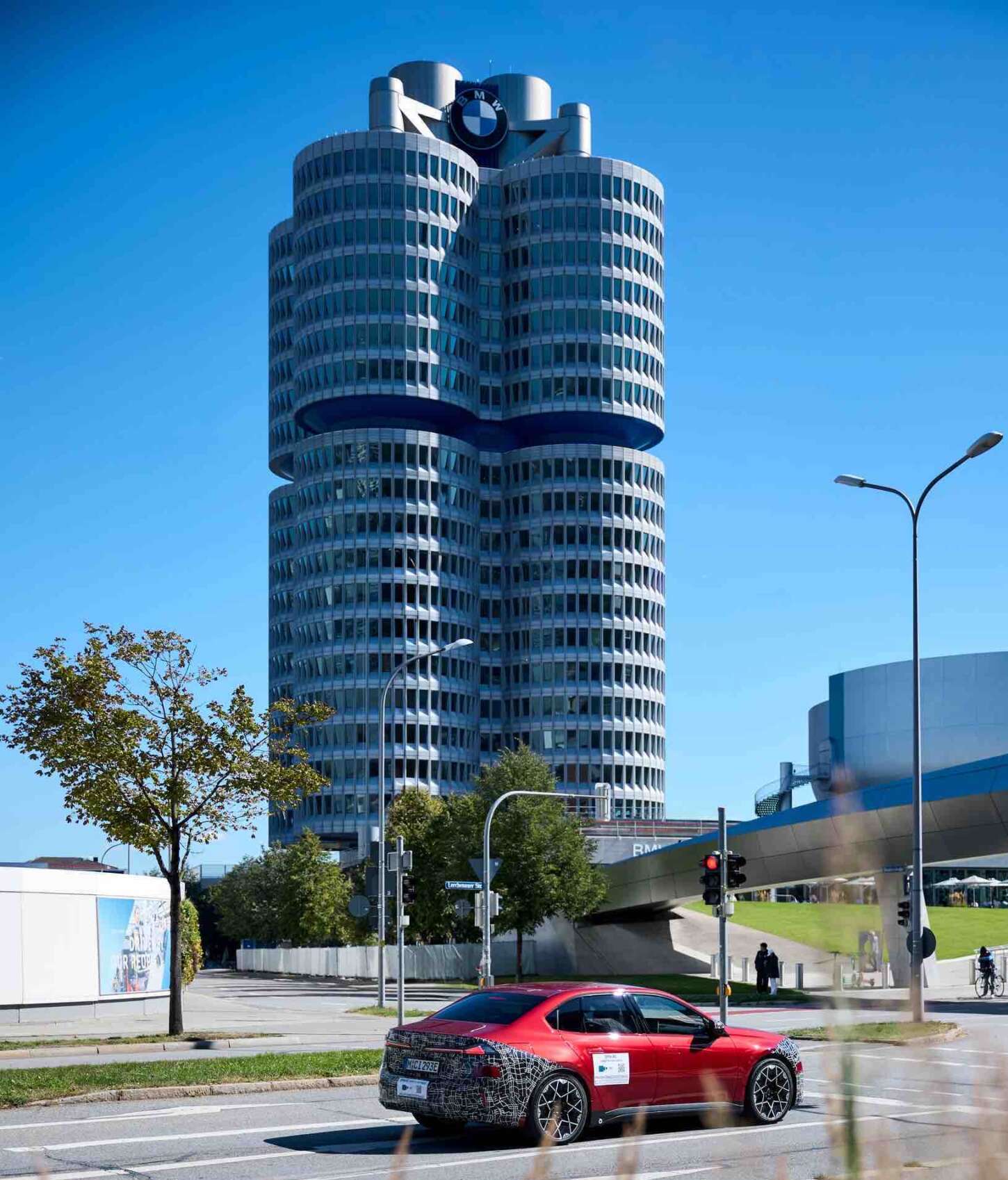
BMW is preparing another major step in the evolution of its driver assistance technology. Starting in 2027, the German automaker plans to expand its navigation-guided assistance functions beyond highways and into urban environments. The new capabilities will include support for city turns, lane changes, right-of-way situations and roundabouts, bringing a new level of assistance to everyday driving. At the heart of this development is BMW Symbiotic Drive, a technology designed to make the interaction between driver and vehicle more natural.
For years, advanced driver assistance systems have been primarily associated with highway driving. BMW now wants to take that technology into one of the most challenging environments for any vehicle: the city.
Urban traffic presents a completely different set of challenges. Intersections, changing right-of-way situations, roundabouts and frequent lane changes require a much more sophisticated understanding of the vehicle’s surroundings. BMW believes its latest generation of assistance technology is ready to take on more of these situations.
The first rollout is scheduled to begin in Germany in 2027, with additional markets expected to follow gradually.
BMW’s Next Step: Navigation-Guided Driving Assistance in Urban Traffic
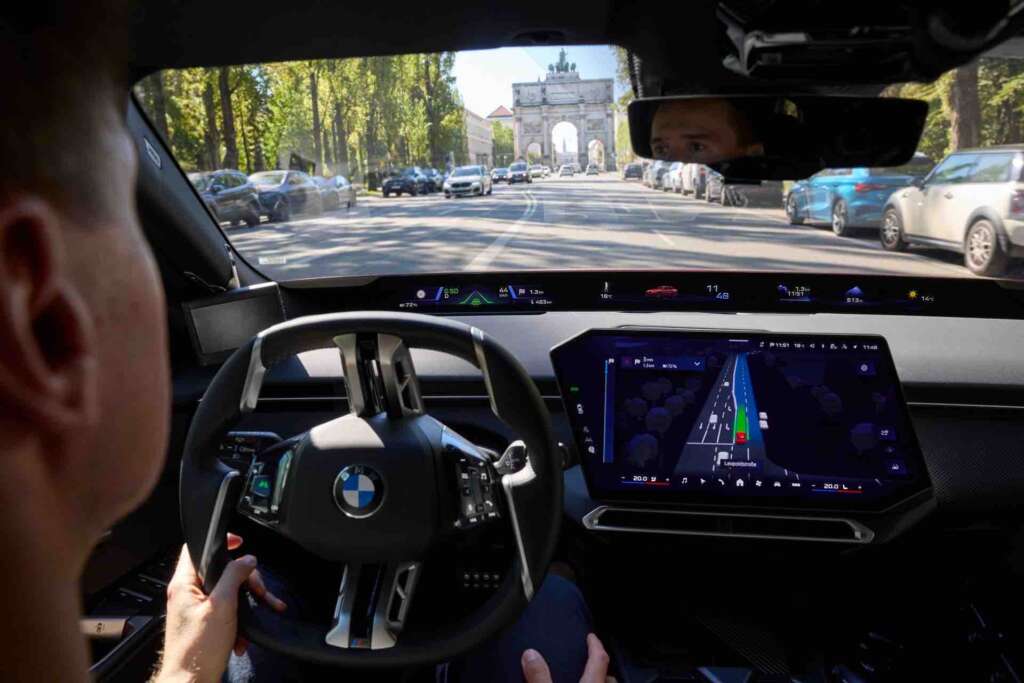
The upcoming expansion will allow BMW’s navigation-guided driver assistance systems to support drivers in situations that were previously outside their main operating environment.
When a route is active in BMW Maps, the system will be able to assist with a broader range of urban driving manoeuvres, including:
- Turning at intersections: supporting the driver when following a planned navigation route through city streets.
- Lane changes: providing assistance when changing lanes in urban traffic.
- Right-of-way situations: helping the vehicle respond to traffic situations involving priority rules.
- Roundabouts: extending navigation-guided assistance to one of the most common and complex features of European road networks.
The objective is to create a more continuous driving assistance experience. Instead of limiting advanced support to highways and major roads, BMW wants its systems to remain useful throughout a much larger part of a journey.
It is worth noting that traffic light recognition and automatic stopping and moving off are not entirely new capabilities. BMW’s existing City Assistant already offers such functions in selected markets, including Germany. The major development planned for 2027 is the expansion into additional urban manoeuvres.
BMW Symbiotic Drive: When the Driver and the Car Work Together
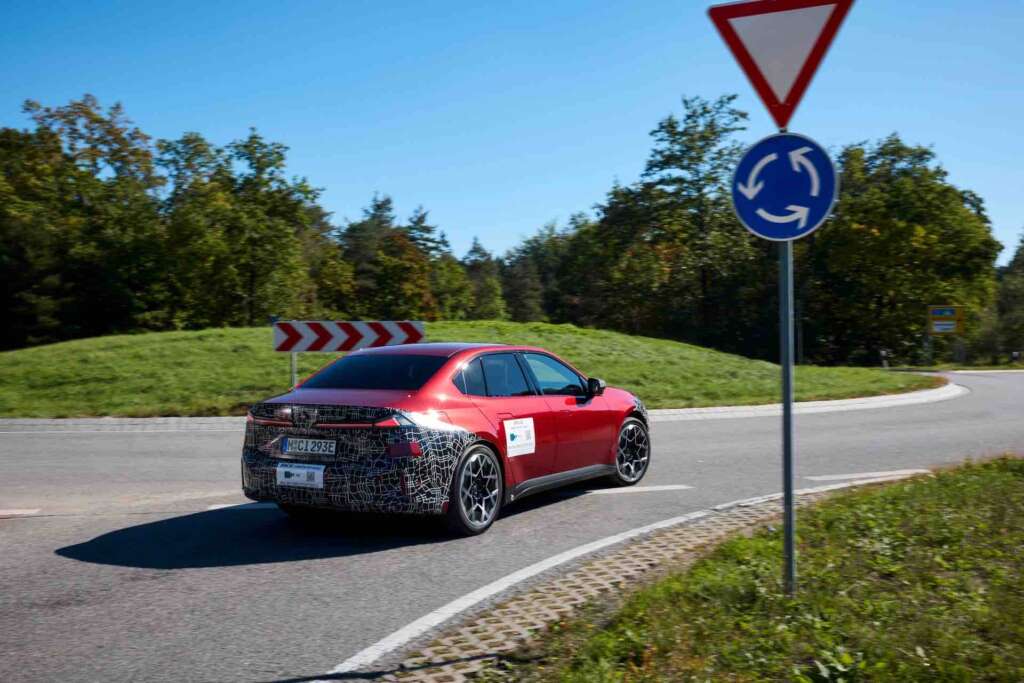
One of the most interesting aspects of BMW’s announcement is the further development of BMW Symbiotic Drive.
Rather than treating the driver and the assistance system as two separate operators, BMW is developing an approach in which both can interact more naturally.
With the assistance system active, the driver can continue to influence the vehicle through steering, braking and acceleration. The system is designed to recognise the driver’s actions and intentions and coordinate its own operation accordingly.
This is an important change in philosophy. Traditional assistance systems can sometimes feel restrictive, particularly when a driver wants to make a small correction while the system is active. BMW’s approach aims to make these interactions smoother and more intuitive.
Symbiotic Drive is also relevant to active safety functions, including lane keeping assistance. The technology is intended to distinguish between deliberate driver input and situations in which the vehicle needs to intervene to help prevent an unintended departure from the lane.
The broader idea is simple: assistance technology should support the person behind the wheel without making the driving experience feel disconnected or unnatural.
Which BMW Models Will Receive the New Technology?
BMW has confirmed that the hardware required for the upcoming functions is already being installed as standard equipment in several new model lines.
Editor’s Choice
The manufacturer specifically lists:
- BMW iX3
- BMW iX4
- BMW 3 Series, across all model variants
- BMW 7 Series, across all model variants
- BMW X5, across all model variants
BMW also plans to extend the technology to additional models in the future.
This is particularly important because customers will not necessarily need to purchase a new vehicle after the official launch of the functions to benefit from the development.
The required technical equipment is already being fitted at the factory, while additional capabilities are planned to arrive through Over-the-Air software updates.
In other words, compatible vehicles could gain new driver assistance functions after delivery, without requiring the replacement of their core hardware. However, having the necessary hardware does not automatically guarantee that every feature will be available in every country. Local regulations, homologation requirements and market-specific software availability will determine the final functionality.
BMW Panoramic iDrive Will Make Driver Assistance More Transparent
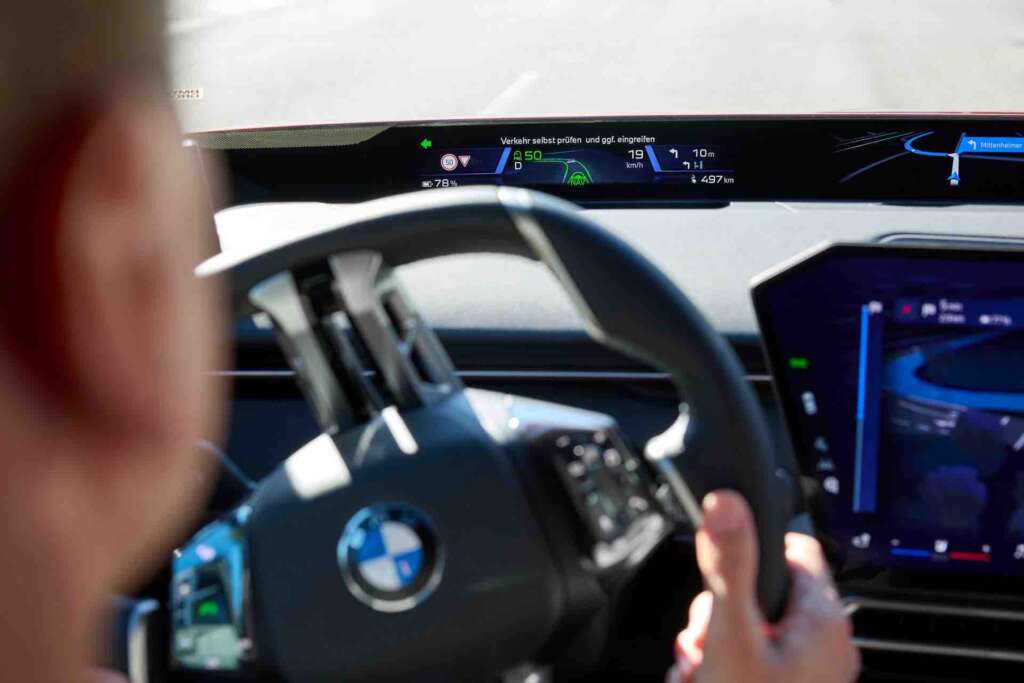
As driver assistance systems become more sophisticated, communicating their decisions and current operating status becomes increasingly important.
BMW is addressing this challenge through its latest BMW Panoramic iDrive interface, introduced with the Neue Klasse generation.
Information about the assistance systems will be integrated into the driver’s field of vision through BMW Panoramic Vision, helping the driver understand what the vehicle is doing and which functions are currently active.
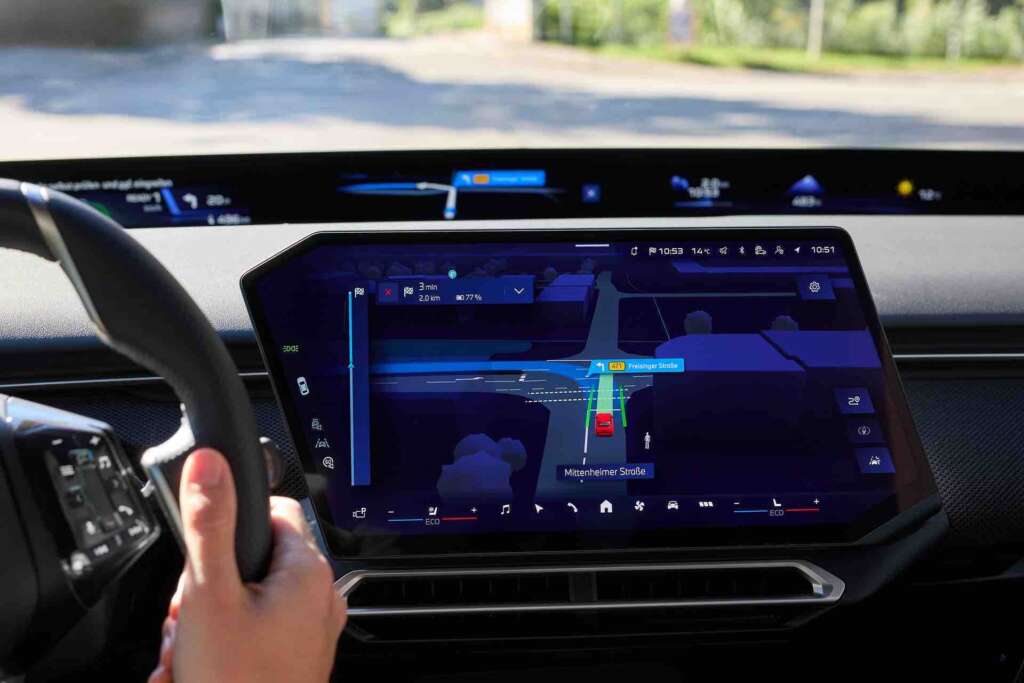
BMW is also developing a more detailed navigation experience through BMW Maps with Driver Assistance.
The 3D visualisation combines three key elements:
- Navigation guidance and the planned route.
- The vehicle’s surroundings and its interpretation of the road environment.
- Information about the driver assistance systems currently supporting the vehicle.
This approach should make it easier for drivers to understand how the car perceives its surroundings, particularly when approaching complex intersections, changing lanes or navigating roundabouts.
BMW Maps with Driver Assistance began rolling out in October 2026 in vehicles equipped with BMW Operating System X. Availability depends on the vehicle, market and compatible equipment.
Regulatory Approval: BMW Completes Important Testing
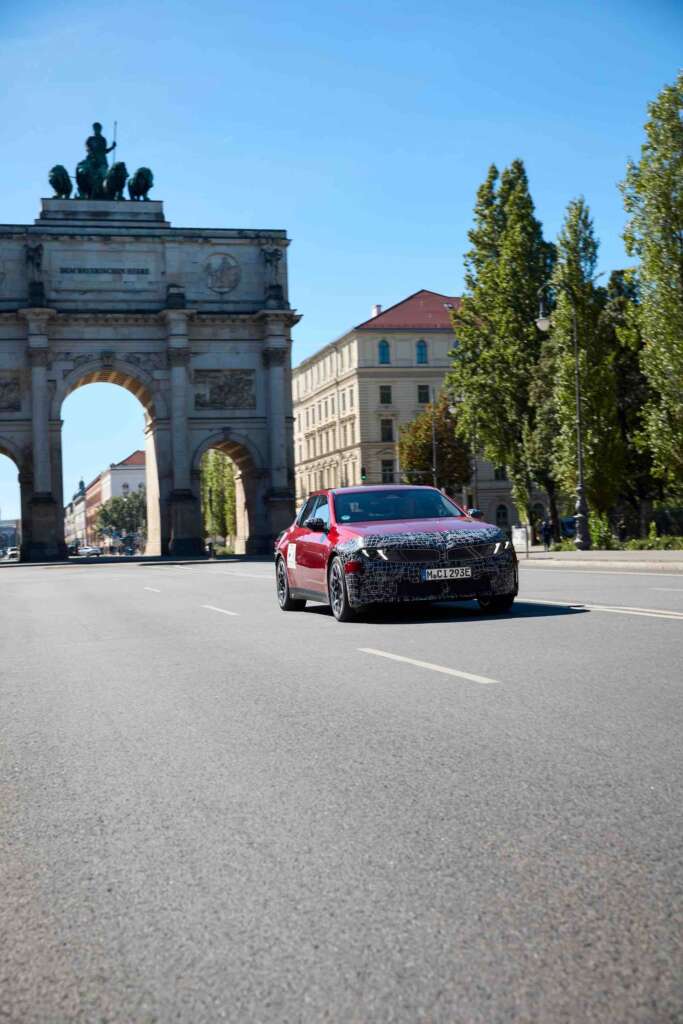
The development of more advanced driver assistance functions is not only a technological challenge. It also requires compliance with increasingly demanding regulatory standards.
BMW’s upcoming urban assistance capabilities are linked to the updated UNECE R171 framework, known as DCAS Series 2.
The regulation establishes requirements for Driver Control Assistance Systems, including systems capable of supporting more complex driving manoeuvres.
BMW has announced that the required real-world driving tests have been successfully completed by an independent technical service.
However, the administrative confirmation is still pending, with BMW expecting it in early 2027.
The company has also filed several patent applications related to the development of its new urban driver assistance functions.
Is This Autonomous Driving? Not Quite.
Despite the expanded capabilities, BMW is not introducing fully autonomous urban driving.
The upcoming technology will operate within SAE Level 2, which means the driver remains responsible for controlling the vehicle at all times.
The driver must continue to monitor traffic, pay attention to the road and be ready to take over whenever necessary. The system also monitors the driver’s attention to ensure that the person behind the wheel remains engaged.
This distinction is important. A vehicle equipped with SAE Level 2 assistance cannot simply be left to navigate city traffic independently while the driver focuses on something else.
BMW’s objective is not to eliminate the driver from the equation. Instead, it wants to reduce the workload associated with everyday driving and make assistance systems more capable in situations that have traditionally required constant human input.
When Will BMW’s New Urban Driving Functions Arrive?
Germany will be the first market to receive the expanded functions in 2027.
BMW plans to introduce the technology in additional countries gradually, but has not yet announced a detailed international rollout schedule.
There is currently no confirmed launch date for the Polish market or other individual European countries.
The availability of specific functions will depend on local regulations, homologation and market-specific requirements.
For owners of compatible vehicles, however, the fact that the necessary hardware is already being installed is an important development. It creates the possibility of receiving additional capabilities through software updates rather than waiting for an entirely new vehicle generation.
BMW Is Moving Driver Assistance Beyond the Highway
BMW’s announcement represents another important step in the evolution of advanced driver assistance technology.
The next challenge is no longer simply keeping a vehicle centred in its lane or maintaining a safe distance from the car ahead on a motorway. It is helping drivers deal with the complexity of everyday urban traffic.
BMW Symbiotic Drive could prove particularly important in this transition. By allowing drivers and assistance systems to interact more naturally, BMW is trying to make advanced technology feel less intrusive and more intuitive.
The arrival of these functions will not turn the BMW iX3, iX4, 3 Series, 7 Series or X5 into fully autonomous vehicles. However, it does show how quickly the capabilities of modern driver assistance systems are evolving.
The first implementation is expected in Germany in 2027. For drivers in other markets, the next important question will be how quickly BMW can bring the technology to their roads.
