

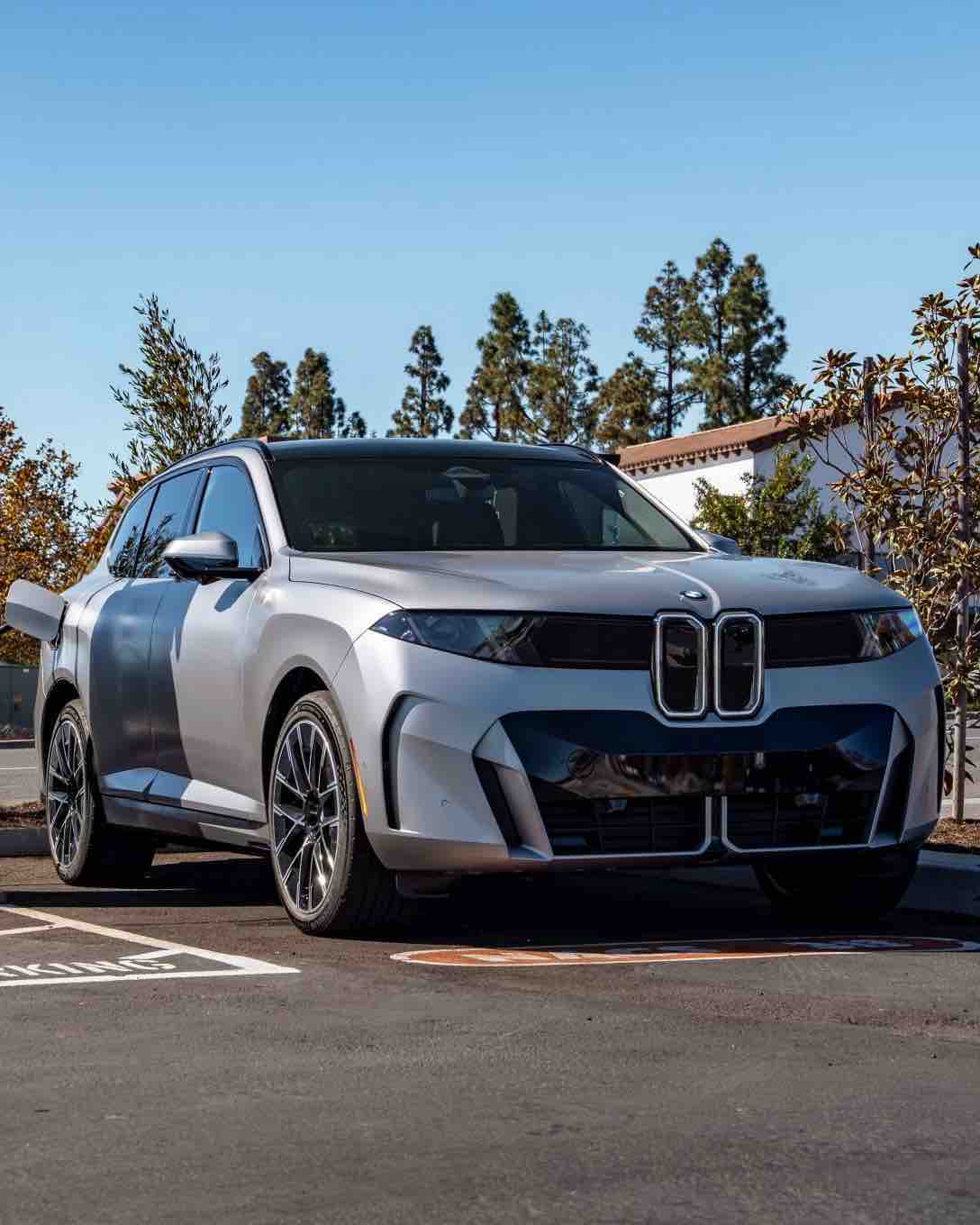
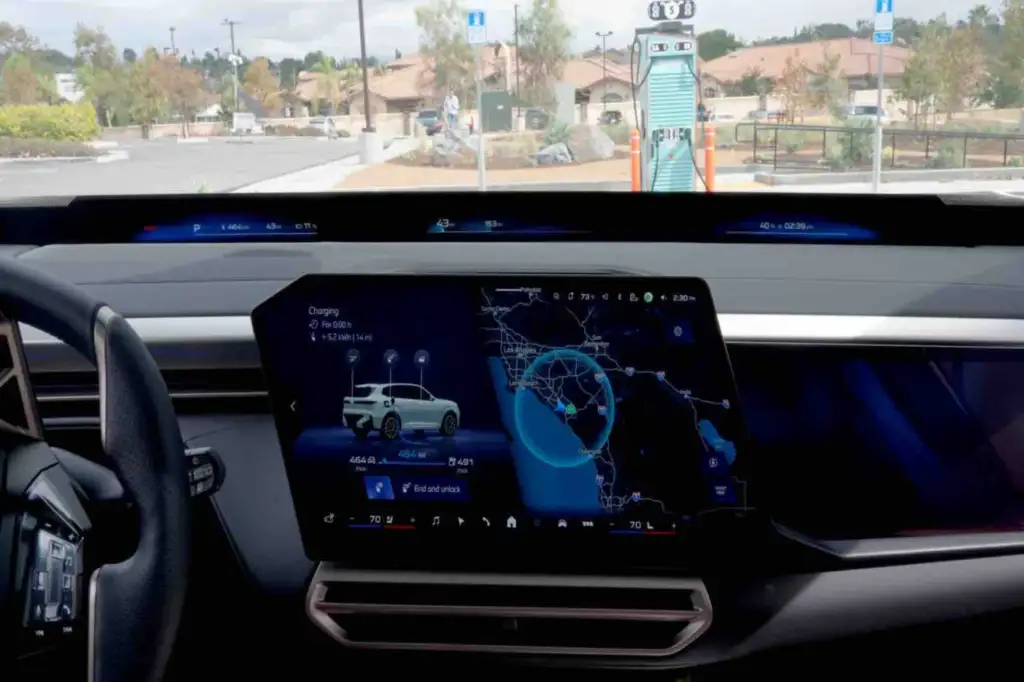
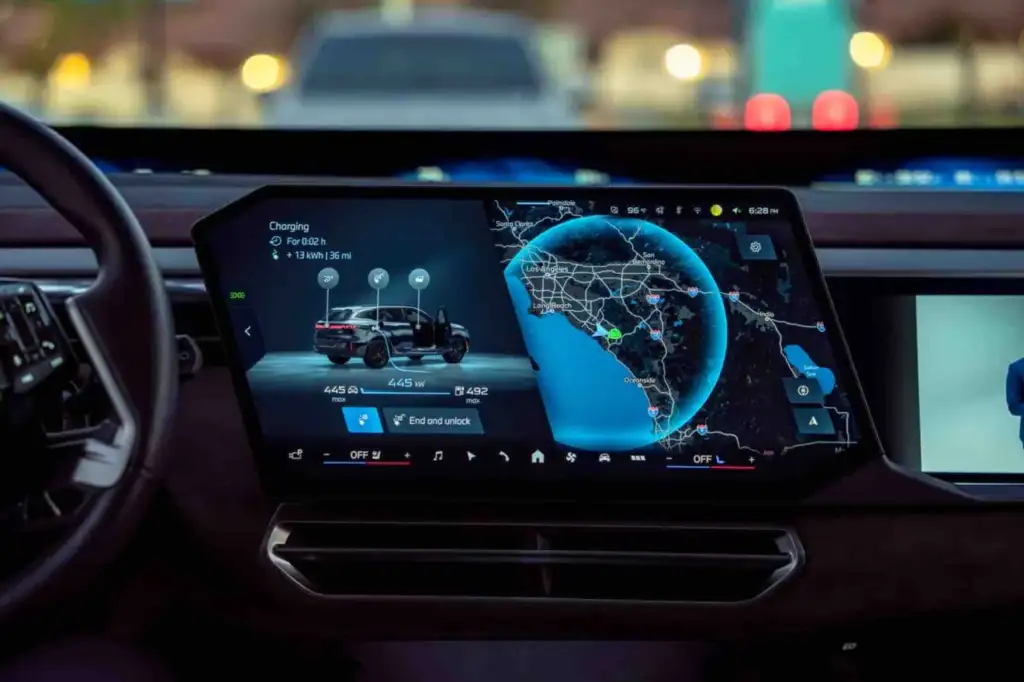
Charging a large electric SUV on a long-distance trip could become significantly less time-consuming. The new BMW iX5 60 xDrive has demonstrated a peak DC charging power of 460 kW during a technology presentation in California. According to BMW, just 10 minutes at a suitable charging station can add enough energy for up to 217 miles (350 km) of driving under the WLTP test cycle.
The figures are made possible by BMW’s sixth-generation electric drive technology, known as BMW eDrive Gen6, which combines an 800-volt electrical architecture with a new battery featuring cylindrical cells and a usable capacity of 141 kWh.
For drivers considering a large electric SUV for family use and long-distance travel, the charging performance is particularly relevant. Battery capacity and driving range matter, but so does the time spent at charging stops. There is, however, an important distinction between a demonstrated peak charging figure and the performance drivers can expect during everyday use.
BMW iX5 60 xDrive: What Gen6 Technology Brings to the Table
Editor’s Choice
The BMW iX5 60 xDrive benefits from the latest generation of BMW’s electric drive technology. At the heart of the system is an 800-volt architecture, designed to support higher DC charging power and improve the overall efficiency of the electric powertrain.
The changes extend beyond the electrical system. BMW has also introduced a new battery design featuring cylindrical cells. According to the manufacturer, these cells offer 20% higher volumetric energy density compared with the cells used in Gen5 technology.
Higher energy density allows more energy to be stored within a given volume. This is particularly relevant in a large SUV, where battery packaging, vehicle weight, passenger space and driving range all have to be balanced.
A 141 kWh Battery for Long-Distance Driving
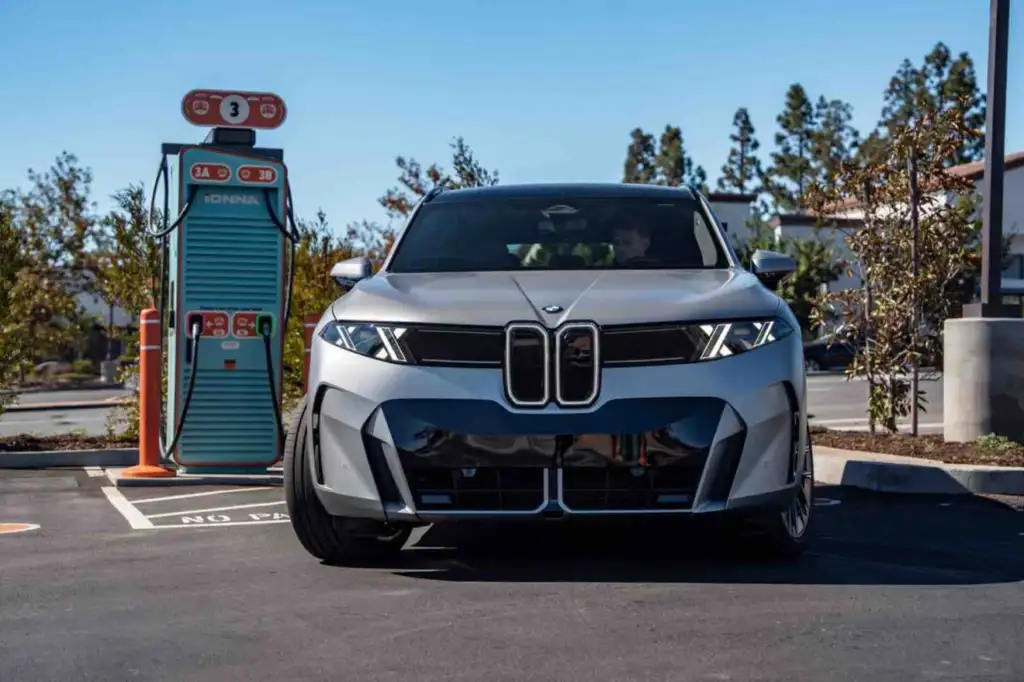
The BMW iX5 60 xDrive features a battery with a substantial 141 kWh net capacity. That is a considerable amount of usable energy, intended to support long journeys while reducing the need for frequent charging stops.
Battery capacity alone, however, does not determine real-world efficiency. Highway speeds, outside temperatures, elevation changes, driving style and vehicle load can all influence energy consumption. The key question is how effectively the iX5 combines its large battery with its available range and charging capabilities.
460 kW DC Charging: Up to 217 Miles in 10 Minutes
The headline figure from BMW’s demonstration is a peak DC charging power of 460 kW. That puts the focus firmly on charging performance, but it is important to understand what the number represents. Peak power is not the same as the average power delivered throughout an entire charging session.
BMW states that 10 minutes of charging can add enough energy for up to 217 miles (350 km) of driving according to the WLTP cycle. The company also quotes a charging time of 22 minutes from 10% to 80% under suitable conditions.
| BMW iX5 60 xDrive | Specification |
|---|---|
| Peak DC charging power | 460 kW |
| Range added in 10 minutes | Up to 217 miles (350 km WLTP) |
| Usable battery capacity | 141 kWh |
| 10–80% charging time | 22 minutes |
| Electrical architecture | 800 volts |
| Electric drive technology | BMW eDrive Gen6 |
These figures suggest that the iX5 could make charging stops considerably more convenient on long journeys. However, the actual charging curve matters just as much as the maximum power rating. Charging power changes as the battery fills, and the final result depends on battery temperature, state of charge and the capabilities of the charging station.
What Does 217 Miles of Added Range Actually Mean?
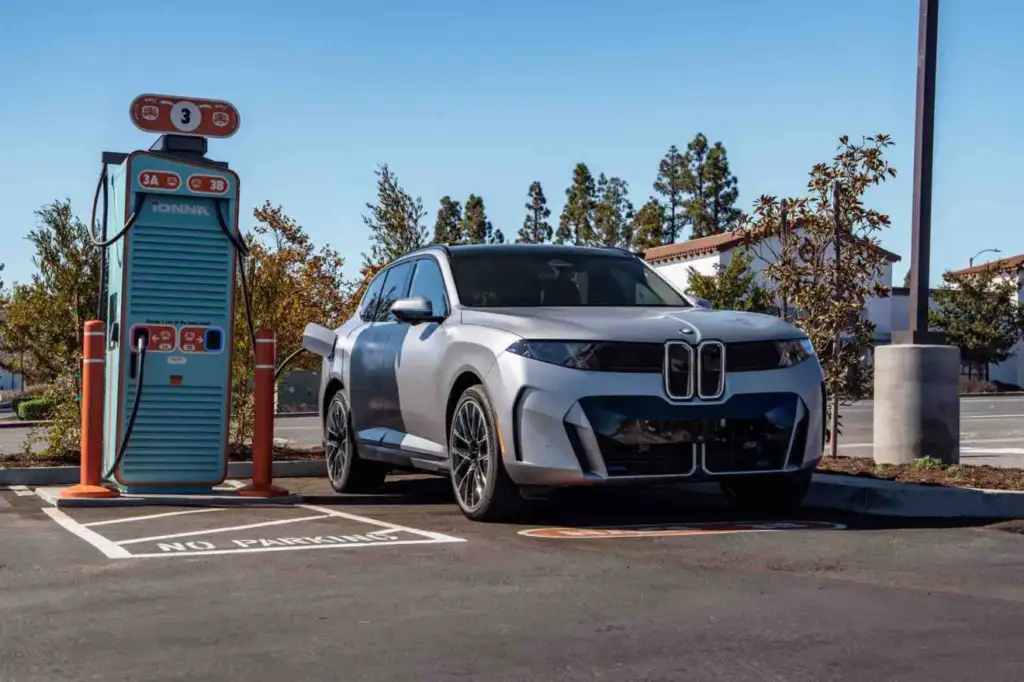
For an electric SUV used primarily for family travel, being able to recover a substantial amount of range during a short stop could make a meaningful difference. Rather than planning a long break around charging, drivers may be able to combine a quick coffee stop with a significant battery top-up.
There is an important qualification, though. The 217-mile figure is based on the WLTP test cycle, which is not a guarantee of the distance a vehicle will cover in every situation. Sustained highway speeds, cold weather and winter driving can all reduce real-world range.
Infrastructure is another part of the equation. To take advantage of the iX5’s peak charging capability, drivers need access to a suitably powerful charging station. Even then, the vehicle may not reach 460 kW throughout the session, or at all, depending on operating conditions.
BMW, IONNA and Alpitronic: The Charging Infrastructure Matters
The California demonstration involved BMW Group, charging network operator IONNA and charging technology supplier Alpitronic. The collaboration highlights an important point: a vehicle capable of accepting exceptionally high charging power is only one part of the equation.
IONNA is developing a high-power charging network across North America, while Alpitronic supplies charging hardware designed to support demanding power requirements. Together with vehicle manufacturers, companies like these play a role in building the infrastructure needed to make faster charging practical.
Still, the 460 kW demonstration should not be interpreted as a promise that this power will be available at every public charging station. Charging equipment, grid connections, station availability and local operating conditions all influence the experience drivers will have on the road.
For BMW, the challenge is not simply to demonstrate a high number during a technology event. It is to make fast, predictable charging accessible to customers across the network they actually use.
My Take: 460 kW Is Impressive, but the Real Test Is on the Highway
The most interesting aspect of the BMW iX5 60 xDrive is not the 460 kW figure on its own. It is the combination of an 800-volt architecture, Gen6 battery technology and a large 141 kWh usable battery.
For a vehicle designed to cover long distances, that combination could be more meaningful than a headline charging record. What matters to drivers is not how high the charging power climbs for a moment, but how consistently the vehicle can replenish energy during repeated stops on a real journey.
There are still questions to answer. A large battery adds weight, charging infrastructure remains unevenly distributed, and real-world efficiency can change considerably with speed and temperature. The quoted figures are promising, but they should be treated as manufacturer claims until independent testing provides a fuller picture.
I would particularly like to see how the iX5 performs during sustained highway driving and in cold weather. Winter conditions are a useful test of battery management, energy consumption and charging consistency. They can reveal much more about a vehicle’s long-distance usability than an ideal charging session in favorable conditions.
BMW eDrive Gen6 looks like an important step in the evolution of the brand’s electric vehicles. Whether it becomes a genuine advantage for everyday drivers will depend on how effectively the technology translates into shorter stops, predictable range and a dependable charging experience.
BMW iX5 60 xDrive: Frequently Asked Questions
What is the maximum charging power of the BMW iX5 60 xDrive?
BMW demonstrated a peak DC charging power of 460 kW. This is a maximum figure, not a charging power that can necessarily be maintained throughout an entire session.
How much range can the BMW iX5 add in 10 minutes?
According to BMW, 10 minutes of charging can add enough energy for up to 217 miles (350 km) under the WLTP cycle. Actual results depend on charging conditions and driving efficiency.
What is the battery capacity of the BMW iX5 60 xDrive?
The battery has a stated usable capacity of 141 kWh and uses cylindrical cells developed for BMW’s Gen6 electric drive technology.
How long does it take to charge from 10% to 80%?
BMW quotes a charging time of 22 minutes from 10% to 80% under suitable conditions.
Can the BMW iX5 charge at 460 kW at every station?
No. The maximum charging power depends on the charging station, battery temperature, state of charge and other operating conditions. Not every public charger can supply the power required to reach the vehicle’s peak figure.
Would charging performance like this make you consider an electric SUV for long-distance travel? Or do battery weight, highway efficiency and charging network availability remain bigger concerns? Share your thoughts in the comments.
