

BMW Neue Klasse Can Stop You Opening the Door Into a Cyclist
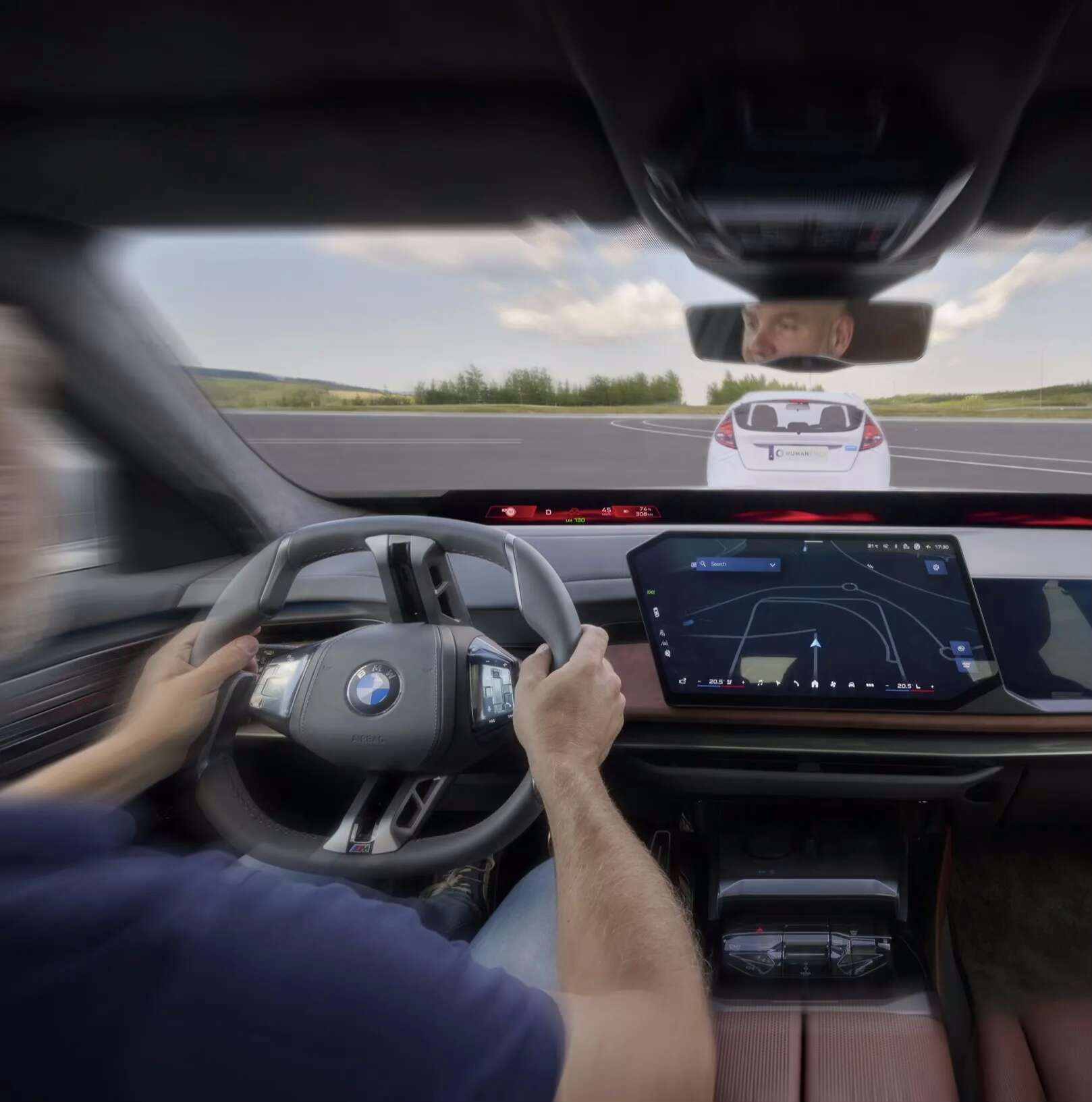
BMW is taking active safety to another level with the Neue Klasse. The new generation of BMW active safety technology can recognize driver intent, react to approaching cyclists and even delay the opening of a door when it detects an imminent collision. But the technology goes much further than preventing so-called “dooring” accidents.
With the launch of the Neue Klasse, BMW is introducing a significantly expanded portfolio of active safety functions as standard across multiple model lines. The BMW iX3 is the first production model to feature the new technology, with the BMW i3, BMW X5 and BMW 7 Series set to follow.
The idea behind the new generation of assistance systems is simple: the car should remain in the background during normal driving, but react quickly and precisely when a dangerous situation develops.
BMW Wants Its Safety Systems to Understand the Driver
One of the key elements of BMW’s new approach is BMW Symbiotic Drive. Rather than constantly intervening, the system is designed to understand what the driver is trying to do before deciding whether assistance is necessary.
BMW says the system can interpret signals such as steering inputs, the use of the turn signal and even a driver’s shoulder check. This allows the vehicle to distinguish between an intentional manoeuvre and an unintended deviation from the lane.
For example, the Lane Keeping Assistant can remain unobtrusive when the driver deliberately moves toward another part of the lane. If, however, the vehicle detects an unintended lane departure or an imminent collision, it can intervene.
This approach is important because modern driver assistance systems are only useful if drivers trust them. BMW’s goal is therefore not to make the car constantly fight the person behind the wheel, but to create a cooperative relationship between driver and vehicle.
BMW Can Now Stop a Door From Opening Into a Cyclist
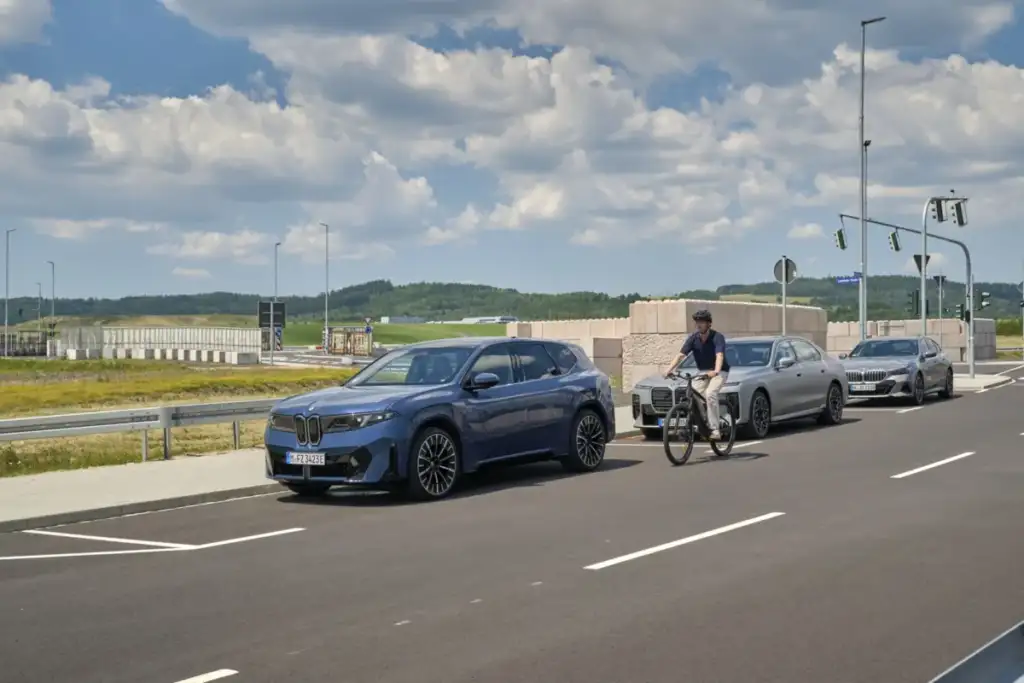
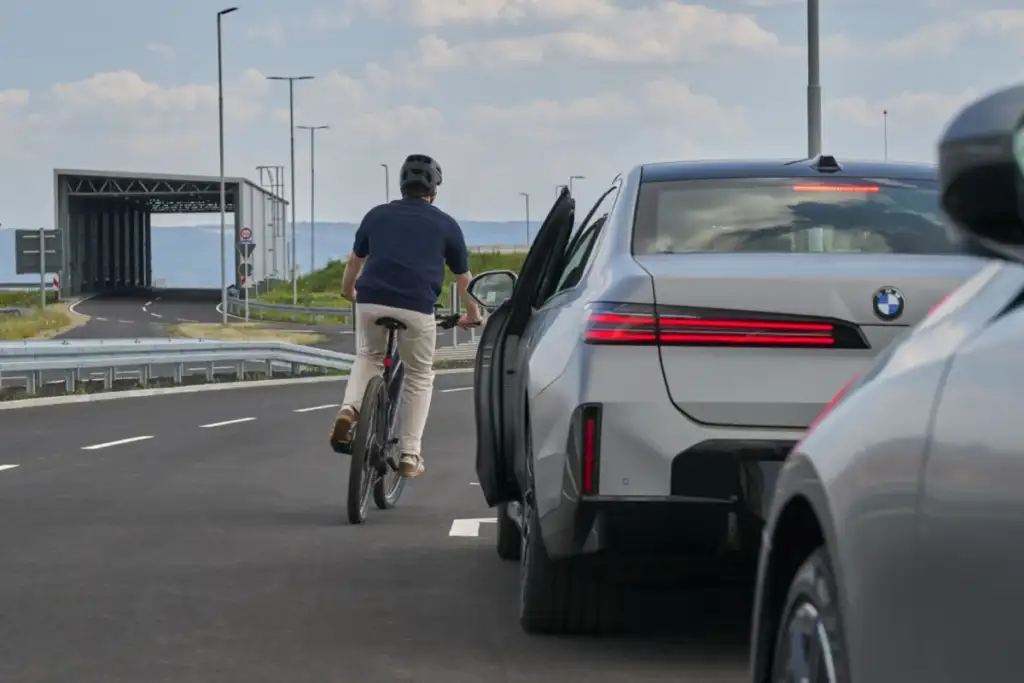
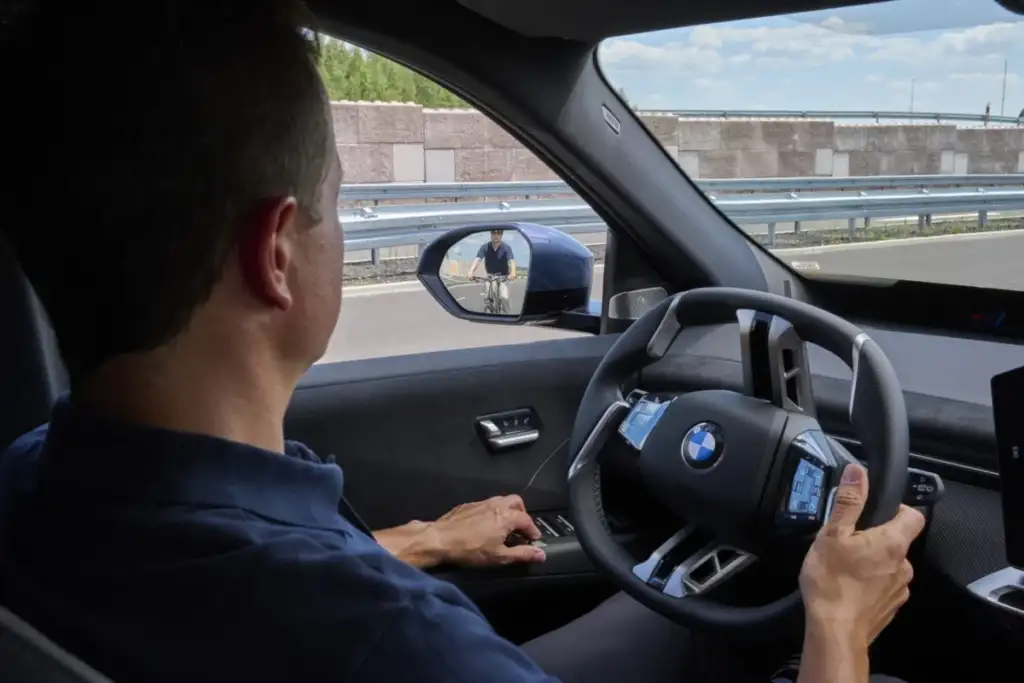
One of the most interesting new features is an upgraded Exit Warning system that can actively delay the opening of the door.
The problem is commonly known as dooring. It happens when someone opens a car door directly into the path of an approaching cyclist or another road user. The consequences can be serious, particularly because the cyclist may have very little time to react.
Editor’s Choice
BMW’s new system uses side radars to continuously monitor the area around a parked vehicle. If it detects a vehicle, bicycle or another road user approaching with a potential risk of collision, the electronic door lock can temporarily delay the opening of the door.
In other words, the BMW does not simply warn the driver. It can briefly prevent the door from being opened until the danger has passed.
BMW says the enhanced Exit Warning system is now part of the standard active safety package introduced with the Neue Klasse.
The significance of this feature was also highlighted by Euro NCAP. The new BMW iX3 received a five-star safety rating under the organisation’s significantly revised 2026 testing protocols, with Euro NCAP specifically noting that the vehicle’s dooring prevention system worked well.
BMW Can Steer Around an Obstacle
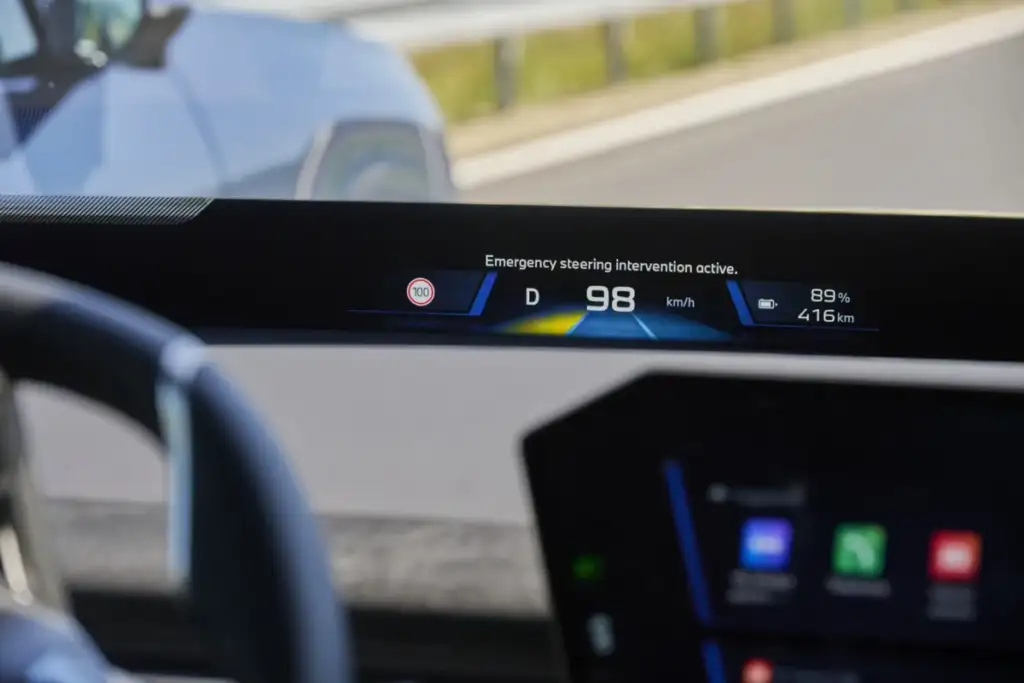
The Neue Klasse also introduces a new level of emergency steering intervention.
Imagine a situation in which a person suddenly steps into the road between two stationary vehicles, or a cyclist appears in front of the car in poor lighting conditions. If the driver does not react quickly enough, the system can automatically steer the vehicle around the obstacle while keeping it within its own lane, provided there is sufficient space.
The system can also react to the risk of a side-impact collision. If another vehicle moves dangerously close, the BMW can apply a brief steering intervention to create additional separation.
This is an important distinction from conventional emergency braking. Instead of simply trying to stop the car, the system can use the available space to avoid the obstacle altogether.
Emergency Braking Gets More Capable
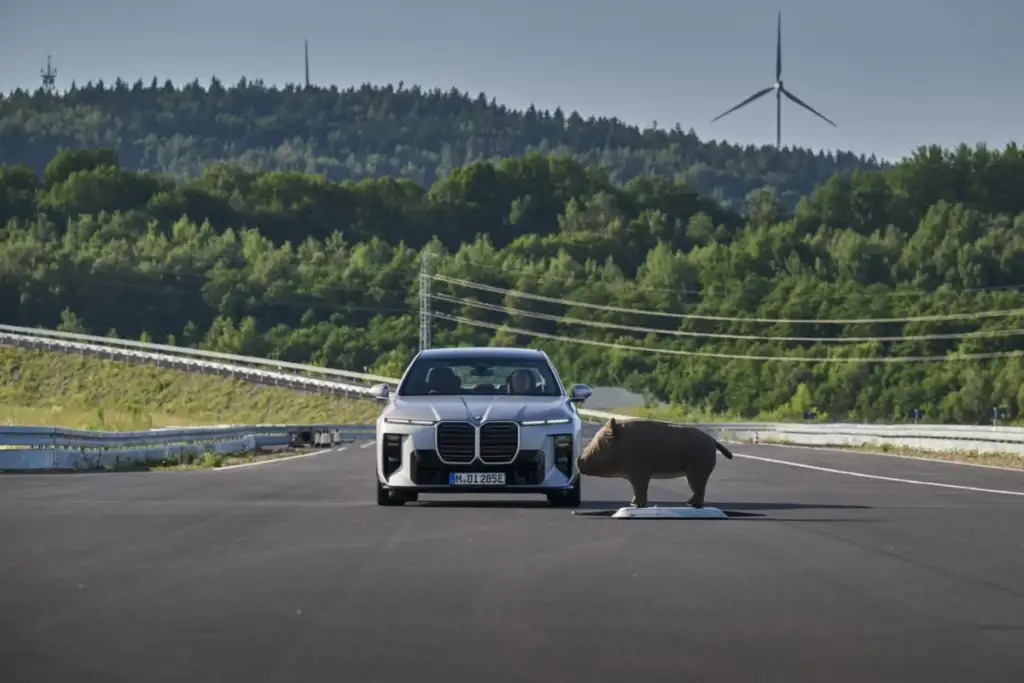
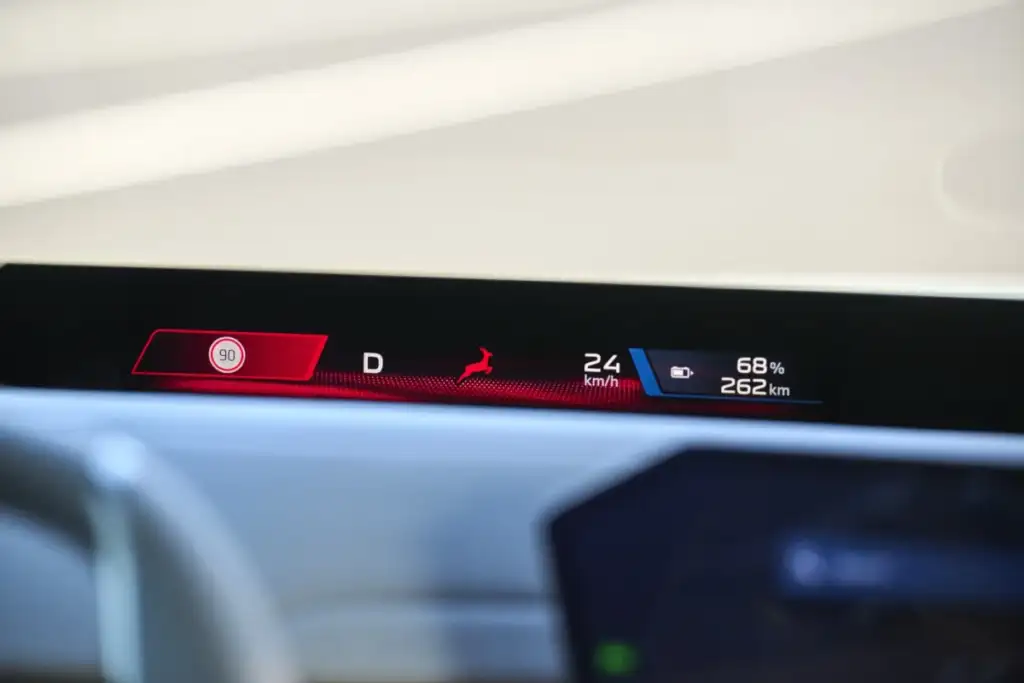
BMW is also expanding the capabilities of its Emergency Brake Assistant.
In situations where a frontal collision is imminent, the system can apply the brakes with full deceleration. Improved sensor technology also allows it to assist in situations involving animals and wildlife crossing the road.
The technology is complemented by evasive steering support, giving the vehicle another way to reduce the severity of a potential collision.
BMW is also improving its Road Priority Warning system. Recognized traffic signs can now be displayed more directly in the driver’s field of view through the BMW Panoramic Vision display. In addition to red traffic lights, yield, stop and no-entry signs, the system can also warn the driver about pedestrian crossings.
What If the Driver Becomes Unable to Drive?
Perhaps the most dramatic safety function is the enhanced Attentiveness Assistant with emergency stop.
If the driver monitoring camera detects that the person behind the wheel is no longer fit to drive, the system can temporarily take control of the vehicle and bring it to a controlled stop.
During the procedure, the BMW can activate the hazard warning lights and initiate an eCall. The driver can override the system at any time.
This is another example of BMW moving beyond systems that simply warn the driver. In a serious emergency, the vehicle can take a much more active role in preventing a secondary accident.
Neue Klasse Also Gets Smarter During Parking
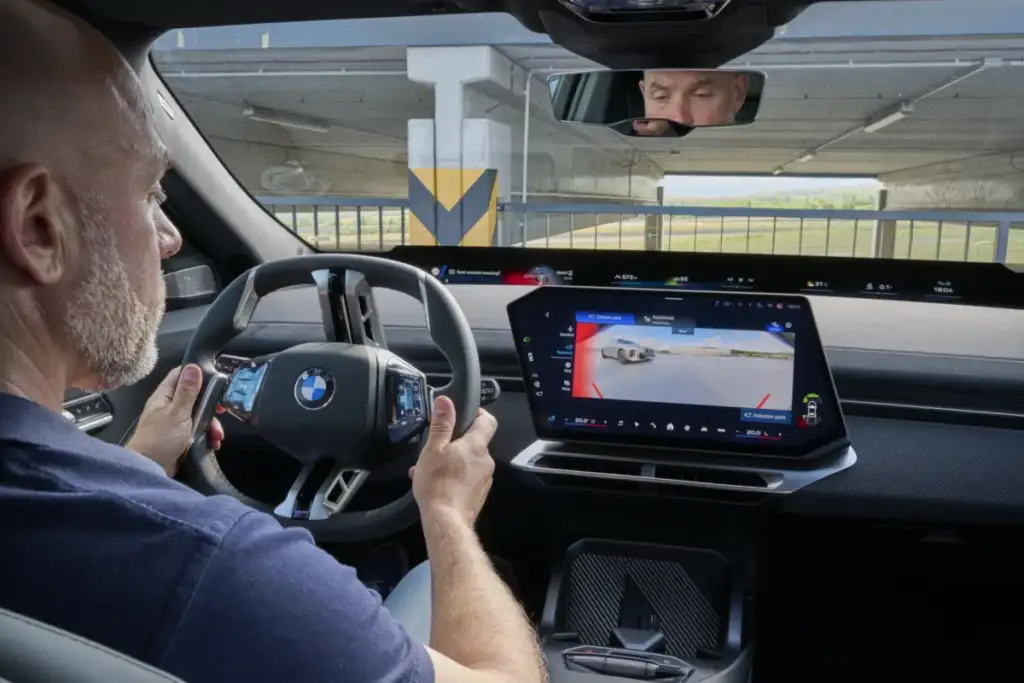
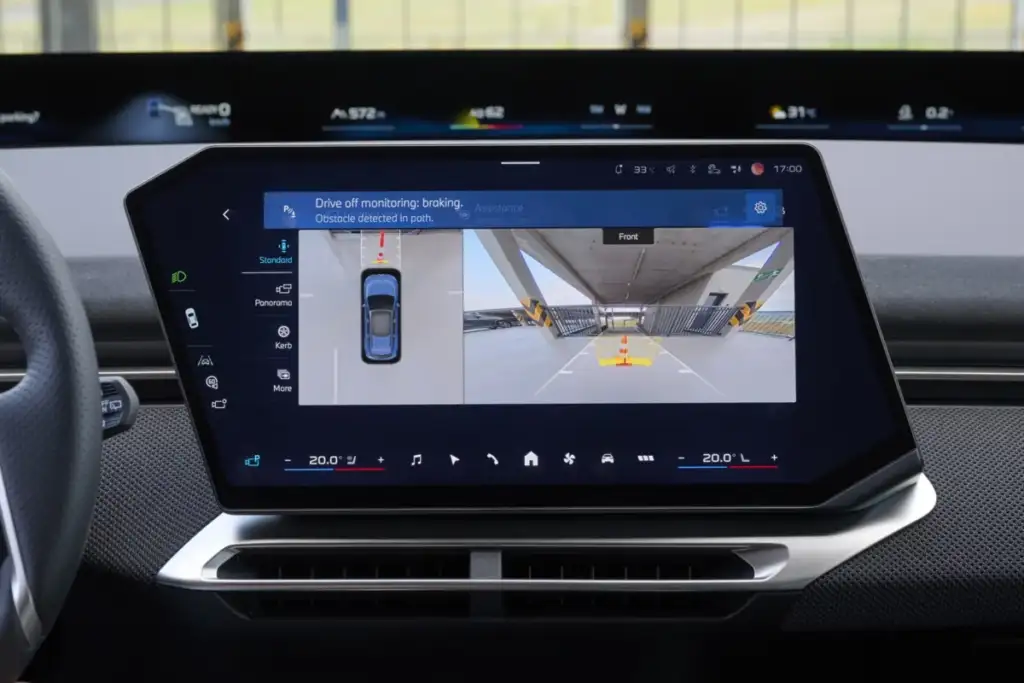
BMW’s new safety functions are not limited to higher speeds. Several systems have also been improved for parking and low-speed manoeuvring.
Active Park Distance Control can use ultrasonic sensors and surround-view cameras to detect obstacles and automatically apply the brakes. For the first time, braking intervention can also be applied to obstacles detected at the sides of the vehicle.
Another useful function is emergency braking for cross-traffic when reversing out of a parking space. Rear side radars monitor the surrounding area and can detect cyclists and other road users approaching from the side.
The system works together with the rear-view camera and the bird’s-eye-view display on the central screen, giving the driver additional information in situations where visibility is naturally limited.
BMW Can Even Detect the Wrong Pedal Input
The Neue Klasse also introduces standard start monitoring, designed to reduce the risk of pedal misapplication.
A typical example is accidentally pressing the accelerator instead of the brake when manoeuvring at very low speed.
If the system detects an obstacle less than one metre away, the vehicle is travelling at up to 2 km/h and the accelerator pedal is pressed unusually quickly and forcefully, the system can intervene.
The BMW then applies the brakes in a controlled manner, either moving forward or backward, until the vehicle comes to a stop.
20 Times More Computing Power
All of these functions require significantly more computing power than previous generations of BMW driver assistance technology.
For the Neue Klasse, BMW has developed a central high-performance computer described by the company as the “Superbrain of Automated Driving.”
The water-cooled computer manages the new active safety, automated driving and automated parking functions. BMW says it offers approximately 20 times the computing power of the previous system.
The new generation of sensors and the improved Assisted View display in BMW Operating System X also allow the vehicle to present detected objects and the current driving situation in greater detail.
Information can be shown on the Central Display, BMW Panoramic Vision or, depending on the specification, the 3D Head-Up Display.
BMW Has Already Tested These Systems in the Real World
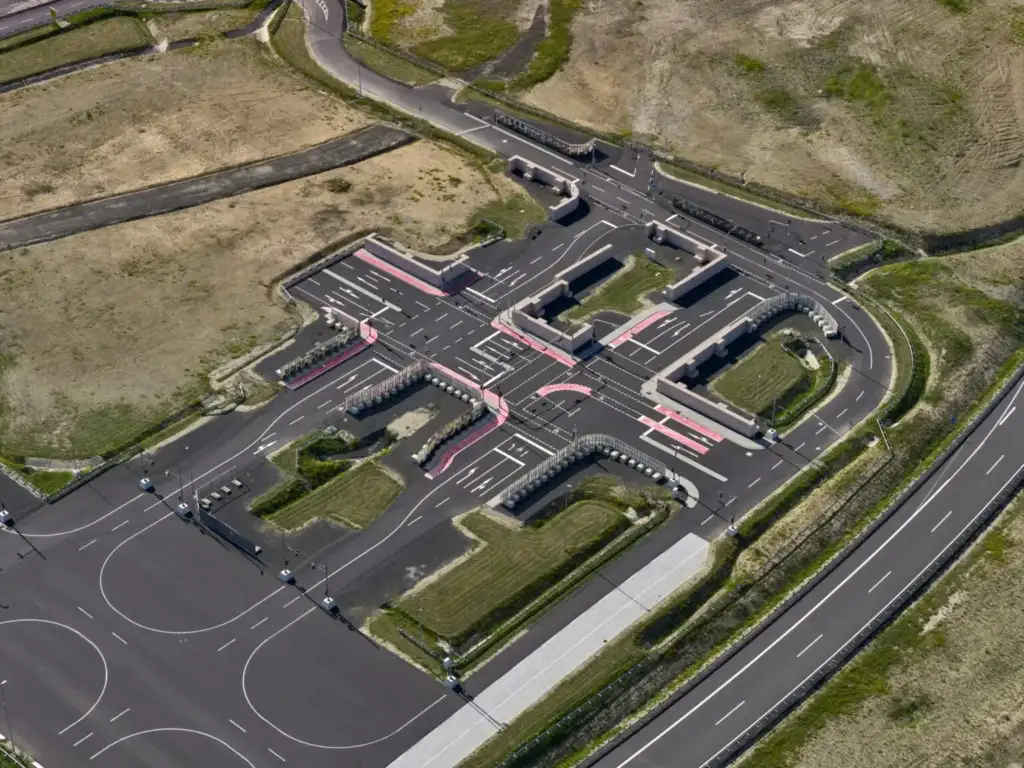
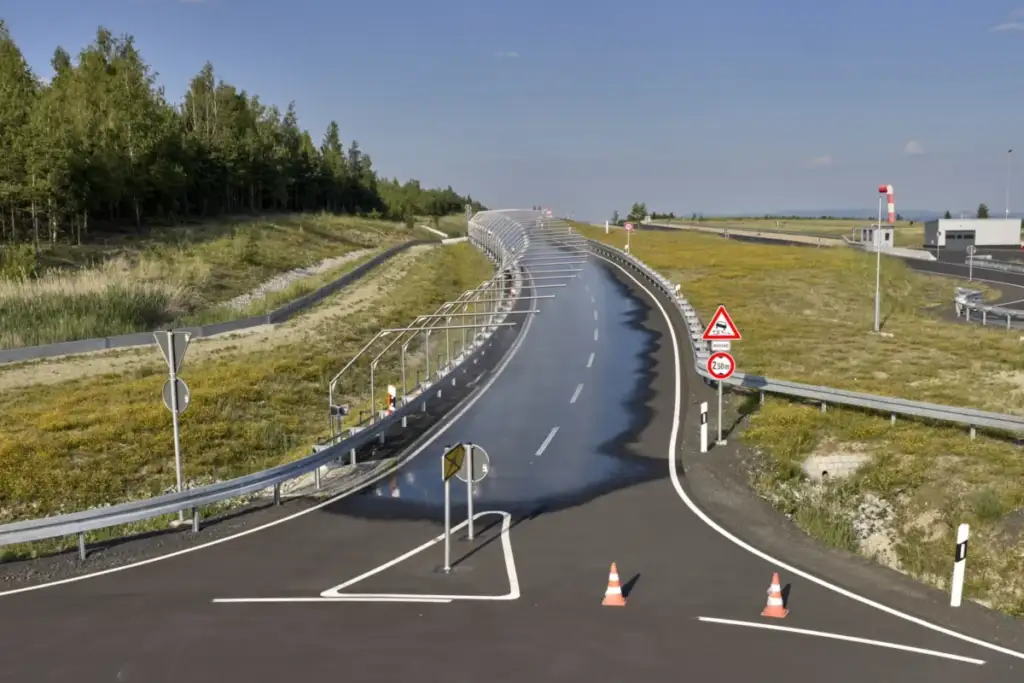
The technology behind the Neue Klasse has not been developed solely through simulations.
BMW’s Future Mobility Development Center in Sokolov, Czech Republic, plays an important role in testing and validating the company’s new driver assistance systems.
The proving ground covers around 600 hectares and features approximately 25 kilometres of test tracks. BMW can reproduce a wide range of real-world situations, from urban traffic and motorway driving to automated parking manoeuvres.
The facility complements virtual simulations and millions of kilometres of testing on public roads in different climatic conditions around the world.
BMW Already Has Real-World Data to Back It Up
BMW says the development of its new safety functions has also been supported by data collected from its connected vehicle fleet.
The analysis covered 1.3 million BMW vehicles equipped with the previous generation of driver assistance technology. The owners had actively consented to data collection.
In the most recent month analysed, the fleet covered around 1.6 billion kilometres in Europe. During that period, drivers received around 8 million visual and acoustic warnings about potential collisions.
In 243,977 cases, active steering or braking interventions by the assistance systems helped prevent a potential collision.
Those numbers underline the direction BMW is taking with the Neue Klasse: instead of treating safety assistance as a collection of isolated features, the company is increasingly integrating sensors, computing power and driver monitoring into one system.
The BMW iX3 Has Already Passed the New Euro NCAP Tests
The first Neue Klasse model also had an opportunity to demonstrate its safety capabilities under Euro NCAP’s new 2026 testing protocols.
The BMW iX3 received five stars, achieving strong results across the organisation’s new safety assessment categories. Euro NCAP highlighted the vehicle’s crash avoidance technology, including its autonomous emergency braking system and dooring prevention function.
The 2026 Euro NCAP protocol places greater emphasis on the entire safety journey, from safe driving and crash avoidance to occupant protection and post-crash response. The BMW iX3 achieved an overall five-star rating under this more demanding framework.
Frequently Asked Questions
What is new about BMW Neue Klasse active safety?
BMW is introducing a significantly expanded range of active safety and driver assistance functions as standard across multiple model lines. The systems can assist during driving, parking and vehicle exit situations.
Can the BMW Neue Klasse stop the door from opening?
Yes. The enhanced Exit Warning system can detect approaching road users and temporarily delay the electronic door lock when opening the door could create a collision risk. The system is designed particularly to help prevent dooring accidents involving cyclists.
What is BMW Symbiotic Drive?
BMW Symbiotic Drive is the company’s approach to integrating the driver and assistance systems into a cooperative system. It uses inputs such as steering movements, indicators and driver monitoring to better understand the driver’s intentions and intervene when necessary.
Can the BMW Neue Klasse steer around an obstacle?
Yes. The emergency steering intervention can automatically steer the vehicle around certain obstacles while keeping it within its own lane, provided that sufficient space is available.
What happens if the driver becomes unable to drive?
The Attentiveness Assistant with emergency stop can detect when the driver is no longer fit to drive. In such a situation, the system can temporarily take control, bring the vehicle to a controlled stop, activate the hazard warning lights and initiate an eCall.
Does BMW Neue Klasse also improve parking safety?
Yes. The new generation includes enhanced Active Park Distance Control, cross-traffic emergency braking when reversing and start monitoring designed to detect potential accelerator pedal misapplication.
How much more computing power does Neue Klasse have?
BMW says the central high-performance computer responsible for active safety, automated driving and automated parking functions provides approximately 20 times the computing power of the previous system.
Is the BMW iX3 safe according to Euro NCAP?
Yes. The BMW iX3 received a five-star Euro NCAP safety rating under the organisation’s new 2026 testing protocols. Its crash avoidance systems, including autonomous emergency braking and dooring prevention, performed strongly in the assessment.
